80s Onward: Björk Fuses Vocals with Experimental Soundscapes
"Nature is not a background; it is a collaborator that breathes through the melody."
Björk is not just a singer; she is a sonic architect who built a cathedral of sound using the raw materials of Icelandic geology and cutting-edge digital technology. Her music defies easy categorization, moving seamlessly between primal screams and delicate electronic whispers.
* Björk transcends genre boundaries, fusing electronic soundscapes with primal, visceral vocal performance. * Her artistic journey mirrors the volatile, extreme landscapes of Iceland, embracing isolation and eruption. * The evolution from Sugarcubes to her solo career represents a deep dive into experimental music theory. * Her work serves as a sonic document of modern existence, blending technology with deep-rooted mythology.

How did Björk go from Reykjavík to the global stage? The cold wind whipped through the streets of Reykjavík in the late 1980s, carrying the scent of salt and the hum of a city that felt both tiny and infinite.
In a small studio, a young woman with wild hair and an even wilder voice began to experiment with sounds that didn't belong to any single genre.
The late 80s and early 90s in Iceland provided a unique breeding ground for creativity. In the relatively isolated music scene of Reykjavík, artists weren't just following trends; they were inventing their own. Björk’s early years were defined by this sense of playful rebellion.
With her band, The Sugarcubes, she first introduced her unmistakable vocal presence to the global stage. While the band had a catchy, somewhat alternative pop sensibility, the cracks of something much larger were already visible.
It was a period of establishing a name, but it was also a period of testing the limits of how much "weirdness" a listener could handle.
The pivotal shift happened when she moved beyond the band structure to pursue a solo career. This wasn't just a change in business; it was a conscious decision to embrace isolation as a creative catalyst.
By stepping away from the collective identity of a band, she could dive into the deep, often uncomfortable waters of pure experimentation.
She realized that to find her true voice, she had to leave the safety of the pop charts behind. This transition turned her from a singer in a band to a singular force of nature.
But how does one translate such vast, abstract feelings into actual sound?
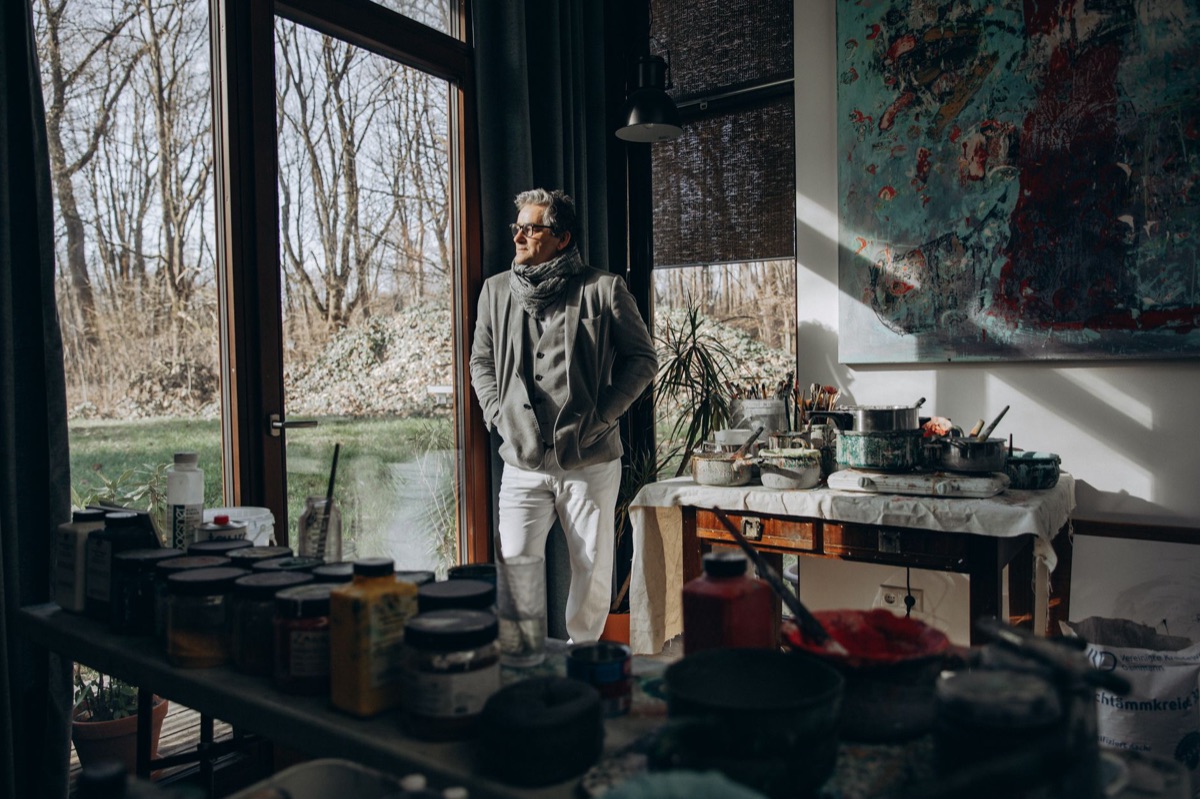
What is the secret behind Björk's experimental sound? A single, sharp synthesizer note cuts through a wall of heavy, distorted drums in a darkened room. The sound is both beautiful and violent, a contradiction that defines the very core of her sonic identity.
Her music is built on a foundation of avant-garde electronic influences, often drawing from industrial textures and IDM (Intelligent Dance Music). She doesn't just use electronic sounds as accompaniment; she treats them as living organisms.
The integration of these digital elements with her organic, often soaring vocals creates a tension that keeps the listener perpetually off-balance.
The relationship between her voice and the musical structure is symbiotic. At times, her vocals are a source of extreme vulnerability—a fragile whisper against a digital storm. At other times, they become a tool of sonic aggression, matching the intensity of heavy beats.
This push-pull is the heartbeat of her discography.
If we look at her landmark albums, we see a mapping of emotional and geological states. *Homogenic* utilized sweeping strings and glitchy beats to mimic the volcanic landscapes of her home, while *Vespertine* explored a much more intimate, micro-rhythmic, and domestic sonic world.
Each project is a deep dive into a specific emotional architecture.
She uses technology not to replace human feeling, but to amplify it. Unconventional instrumentation—from prepared pianos to custom-built digital controllers—allows her to sculpt sounds that feel both ancient and futuristic.
When I sat in a quiet room in 2024, listening to her discography through high-fidelity headphones, I realized her music isn't meant to be background noise; it demands you confront the texture of the sound itself.
However, her ability to maintain this intensity leads to a question of how her environment actually shapes her.
Thematic Cartography: Echoes of Iceland in Her Sound
The sun hangs low on the horizon during a midnight summer, casting long, blue shadows over a field of moss-covered lava. There is no sound except for the low hum of the wind and the distant crack of shifting ice.
The extreme Icelandic environment is a constant, invisible presence in her work. The geothermal energy that heats the ground and the violent eruptions of volcanoes are mirrored in her sudden shifts from quietude to explosive crescendos.
The vast emptiness of the Icelandic highlands finds its way into her use of space and silence.
She often weaves deep-seated cultural motifs and folklore into her compositions. This creates a sense of "primal vs. futuristic" tension. It is as if she is a traveler from a high-tech future returning to a mythical, elemental past.
Her lyrics often touch on these elemental forces—water, ice, fire, and earth—treating them as characters rather than mere setting.
The journey of her sound is a transition from the small-scale intimacy of a local singer to a global sonic projection. Yet, even when her music reaches the largest concert halls in the world, it never loses that sense of Icelandic solitude.
| Element | Musical Representation | Emotional Quality |
|---|---|---|
| Volcanic Eruption | Heavy, distorted percussion & sudden crescendos | Power, Chaos, Rebirth |
| Glacial Ice | Shimmering, high-frequency digital textures | Cold, Clarity, Stillness |
| Geothermal Heat | Warm, sweeping string arrangements | Vitality, Tension, Depth |
| Vast Landscapes | Wide reverb and expansive ambient spaces | Isolation, Wonder, Scale |
But how does she manage to work with so many different personalities without losing her own identity?

Collaboration as Crucible: Navigating Her Musical Partnerships
In a dim studio in London, a producer adjusts a slider on a mixing desk, while Björk stands in the corner, eyes closed, listening to a single, repeating loop. They are searching for a sound that doesn't exist yet.
Throughout her career, Björk has worked with a diverse array of producers and arrangers. These collaborations are rarely about following a producer's lead; instead, they serve as a crucible for her own vision.
Whether working with electronic pioneers or classical arrangers, she uses these partnerships to test the boundaries of her own sound.
There is a constant, healthy tension between her need for artistic control and the necessity of musical evolution. By bringing in outsiders, she prevents her sound from becoming stagnant. These collaborators act as sounding boards, helping her refine her complex ideas into something tangible.
It is important to note that her experimentalism is not for everyone. Some listeners find her sudden shifts in texture jarring rather than transformative, and her work often requires a level of active, focused listening that can be taxing.
If her music is so transformative, why does her visual identity play such a massive role?
Björk as Cultural Icon: Beyond the Music
A flash of a brightly colored, sculptural outfit catches the eye in a crowded gallery. It is a visual statement as loud as any melody, blurring the line between fashion, art, and identity.
Her visual aesthetic is inseparable from her sound. From her iconic album covers to her avant-garde stage costumes, the visual component is a vital part of the storytelling.
She treats her persona as a piece of performance art, often using it to challenge mainstream expectations of how a female pop star should look or behave.
She has had a profound impact on contemporary music theory and artistic independence. She proved that an artist could be globally successful while remaining deeply experimental and uncompromising.
Her career serves as a blueprint for artists who wish to navigate the tension between the mainstream and the avant-garde.
Her legacy is defined by this refusal to compromise. She has built a career on the idea that the most personal, strange, and specific expressions of an individual can resonate on a universal scale.
But as we look toward the next decade, we must ask: where does the quest go from here?
The Future Sound: Where Does Her Sonic Quest Lead?
The studio lights dim, leaving only the glow of a computer screen reflecting in a window. The session is over for now, but the air is still thick with the remnants of a new, unheard melody.
As she continues to evolve, Björk remains open to absorbing new influences. Her work suggests a cyclical nature—a constant return to core themes of nature and technology, but always through a new lens.
She remains a student of sound, always looking for the next way to translate the human experience into noise.
The ongoing dialogue between the artist and her medium is far from over. As technology changes, her way of capturing the "soul" of sound will likely change too. But the core of her quest—to find the intersection of the biological and the digital—remains constant.
To understand her evolution, one can follow this general trajectory of her creative process:
- Conceptualization: Identifying a specific emotional or natural theme (e.g., volcanic activity or microscopic intimacy).
- Sonic Palette Selection: Choosing a mix of organic instruments and digital textures that represent that theme.
- Collaborative Refinement: Bringing in external producers to test the boundaries of the chosen sounds.
- Visual Integration: Developing an aesthetic identity that complements the sonic world.
- Final Execution: Releasing a cohesive work that stands as a complete sensory environment.
#
FAQ
비요르크의 음악적 특징은 무엇인가요?
비요르크가 글로벌 무대에 서게 된 경로는 어땠나요?
비요르크의 음악적 진화에 있어 중요한 전환점은 무엇이었나요?
Related posts

IMF Intervention: 18% Rates and the Strain on Foreign Funds

High Interest Rates Stabilized Iceland Post-Banking Failure
Iceland Winter: Pursuing the Aurora Beyond Tourist Crowds

Iceland in July: Unlock 24 Hours of Golden Daylight
Popular posts
7 Days in Iceland: See Glaciers, Aurora, and Hot Springs
82% State Funding Supports Symphony's Cultural Journey
82% State Support: Securing Iceland's Musical Future
Comments 0